Engage
Be present
Discuss, collaborate and listen.
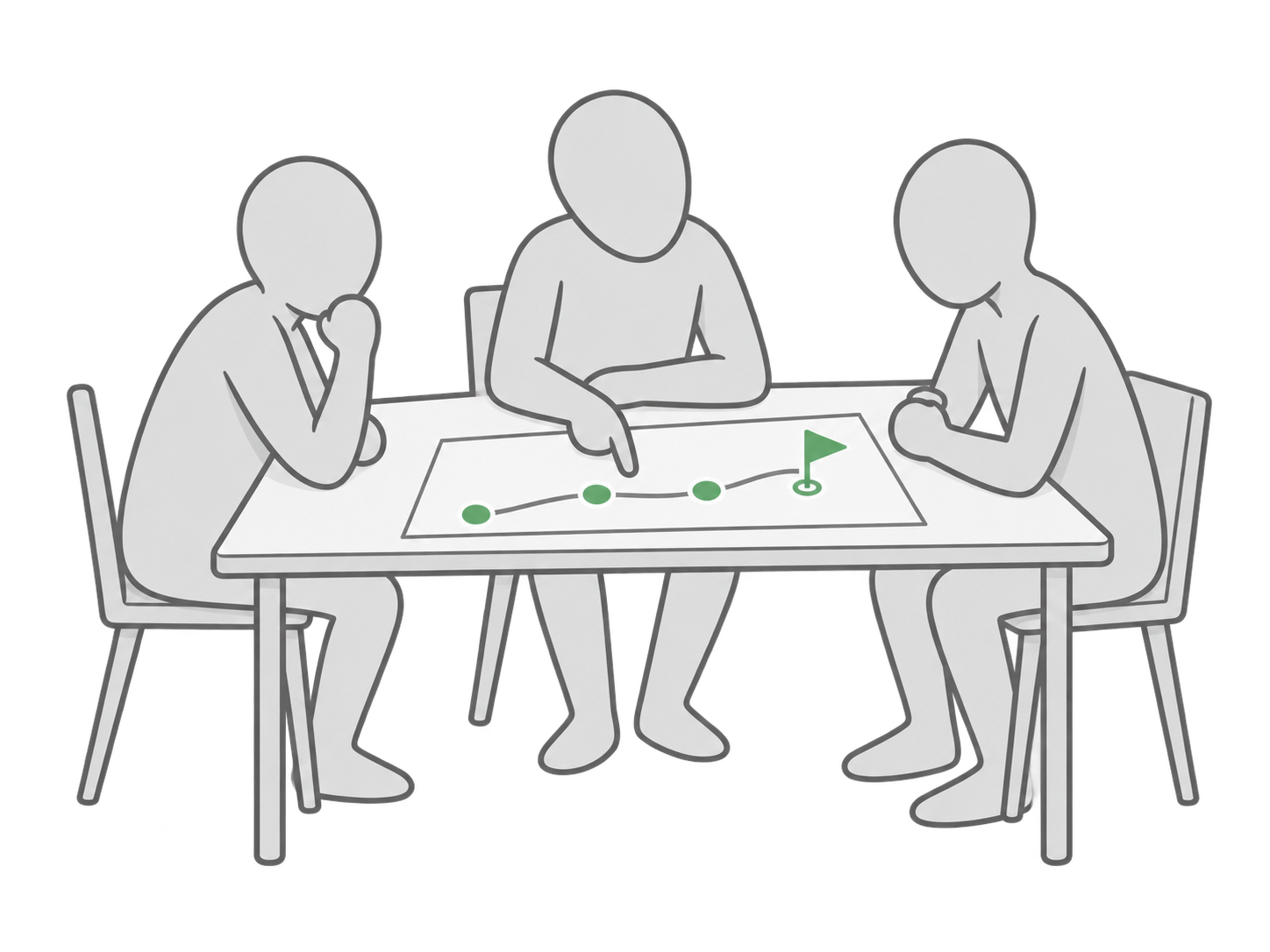

Engage
Discuss, collaborate and listen.
Challenge
Strong convictions, loosely held.
Trust
Make it safe to speak honestly.
Commit
Say it in the room, then back the decision.
Agree
Confirm it and move on.
Differ
Hear each view. Decide later in the agenda.
Missing
Name the gap.
Write your answer, then share it with the team.

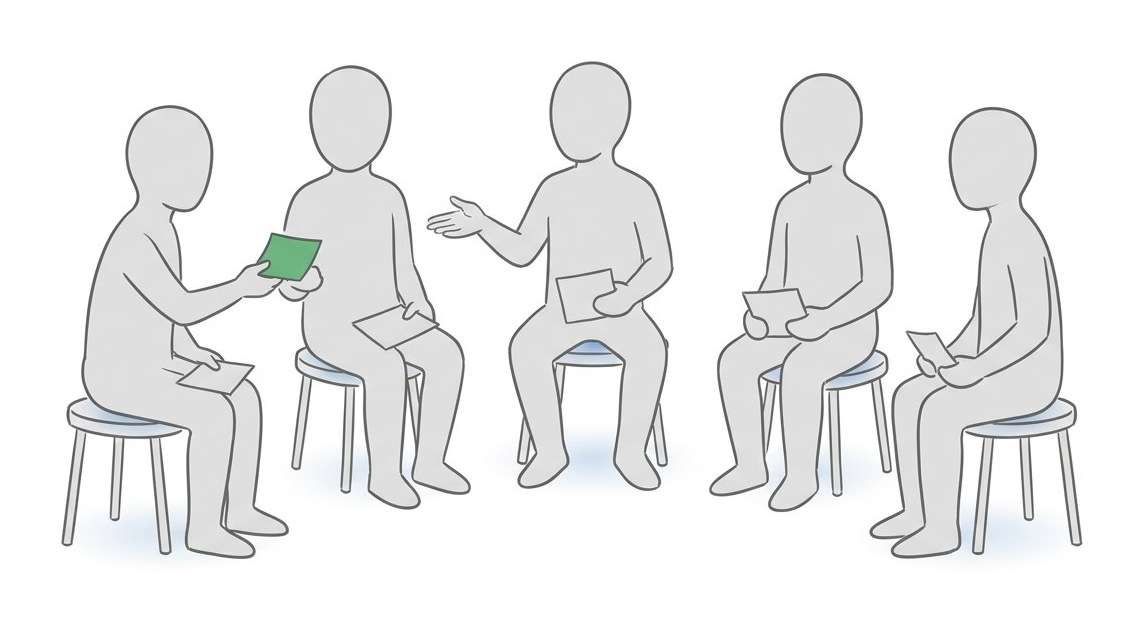
A strong team gives each other feedback. It starts with appreciation.
Write it down.
Say it to them, then hand them the note.
Go left first, starting with the CEO. Then go right.
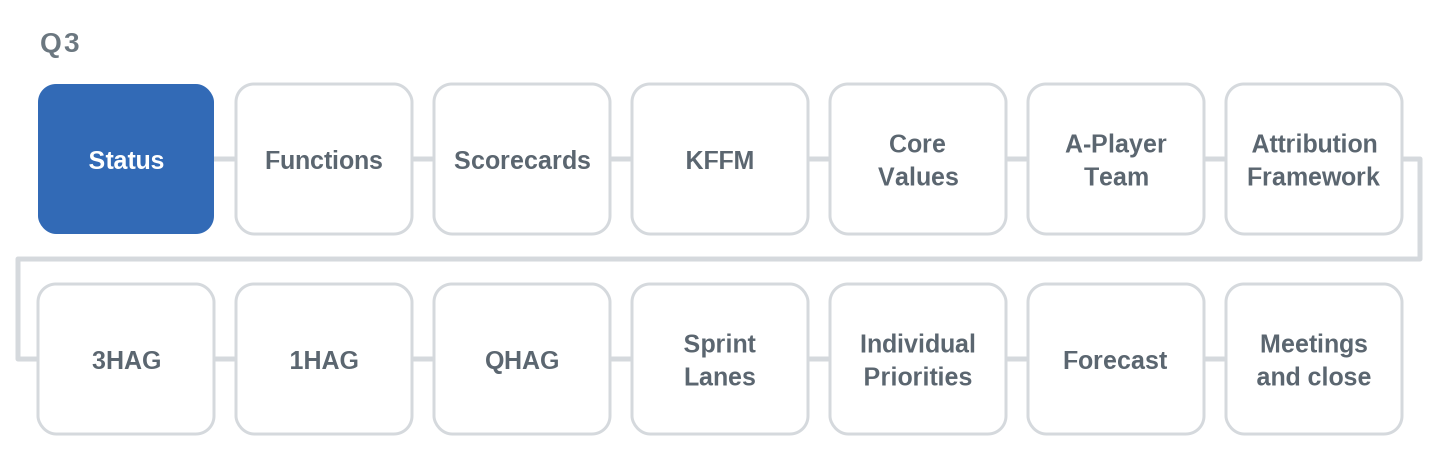
In Metronome: open One Page Plans. Review the 1HAG and last QHAG.
Fiscal numbers: gross revenue, margin and ending cash.
Non-fiscal numbers: widgets and head count.
Each priority: was it done, and did it succeed?
Where was your estimate wrong, and what did you learn?
Bring the brutal facts.
In Metronome: open Function Chart. Test it against how last quarter went.
One person
Make the load visible.
One function
Agree on who is accountable.
A gap
Name the person who will own it.
A new function
Add it.
In Metronome: open Team View. Check it against your Function Chart.
Every function is in the Team View, with its owner.
Each owner says their critical number: the one number that tells them whether they had a good day.
In Metronome: open Scorecards. Each leader answers in turn.
Is your own scorecard complete?
Does each of your direct reports have one?
If not, say by when.

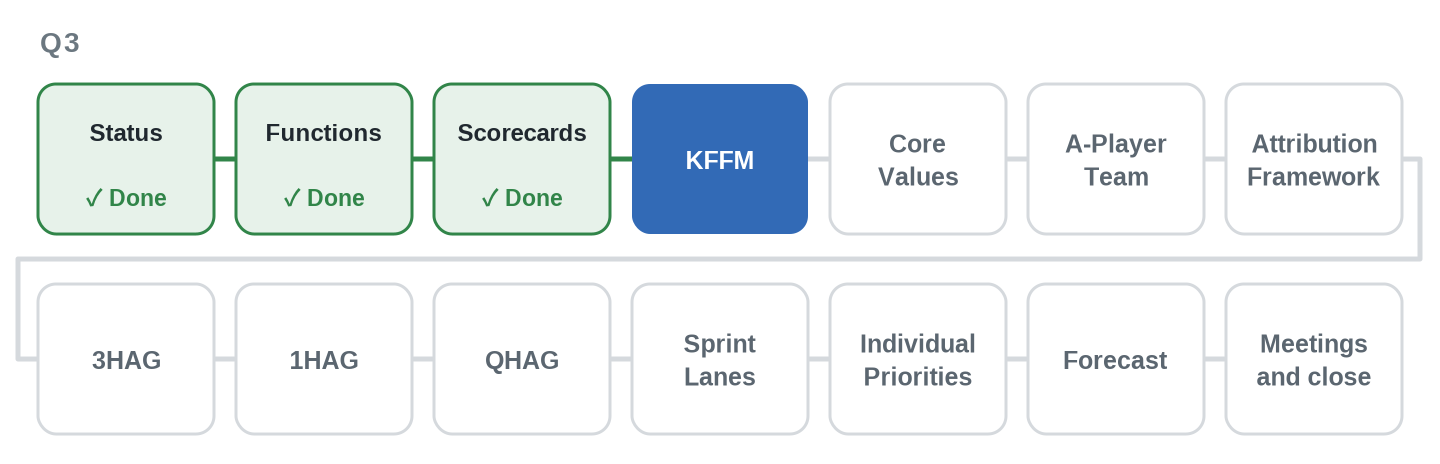
In Metronome: open KFFM. Put it on the screen.
The 3 to 5 key functions are still the right ones.
Each owner rates their function red, yellow or green, by its critical number.
What will it take to turn it green?
In Metronome: open KFFM. Go lever by lever.
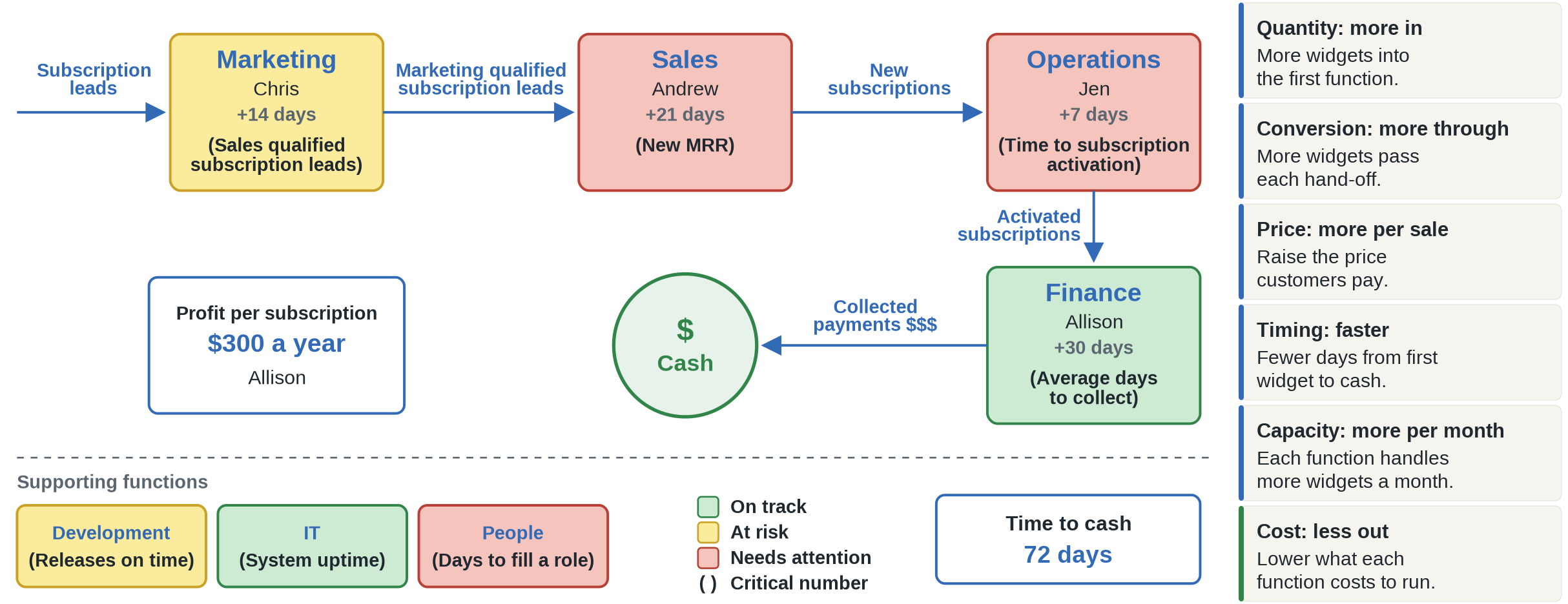
In Metronome: open KFFM. Which lever moves cash fastest?
Make that lever a candidate for a QHAG priority.
Then open Meetings. Add a KFFM item to the weekly leadership meeting.
Each week, look at the flow: where is it stuck?
For each red critical number, its owner writes the situation, cause, correction and follow-up.
In Metronome: open One Page Plans.
Read each value and the behavior it means.
Is it a value you hire and fire on, or a brand value?
When did you last let someone go for not living it?
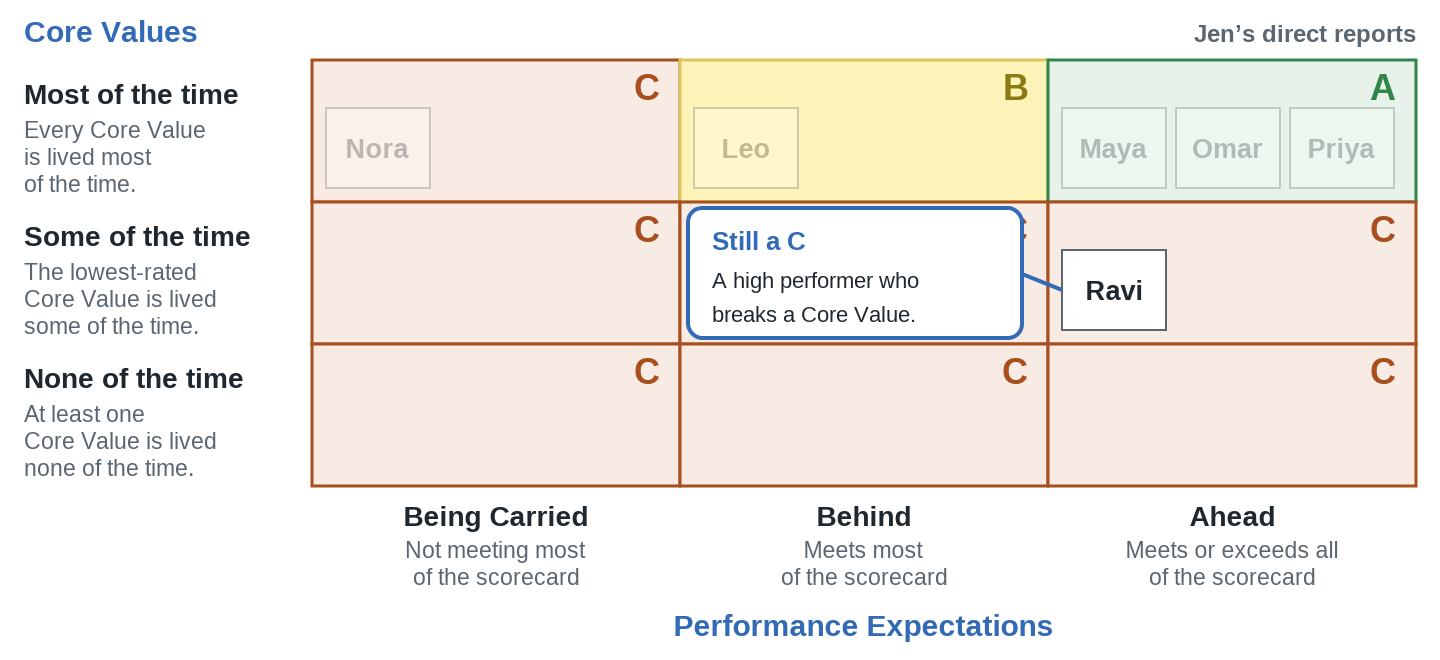
Does someone who keeps breaking it belong here?
Would you build a new company around it, in any industry?
Then ask: is an important value missing?
Example
Tell the truth. Especially to yourself.
Example
When blocked, dig in. Get creative. Get it done.
Example
Do what you say. Every time.
Change only what failed the test.
Each value has a name and the behavior it means.
Ideally 3, up to 5.
They describe how your best people already act.
In Metronome: open One Page Plans.
Read your Core Purpose aloud. What needs to change?
In Metronome: open One Page Plans. Read your BHAG aloud.
Can people understand the ambition?
Does it express why you exist?
Could you tell whether you had achieved it in 25 years?
Does it create energy among the leaders?
Would others want to pursue it?
What would you need to become able to do?
The goal: 90% or more of your people are A-Players.
Today each leader assesses their direct reports. Peers weigh in.
The CEO’s assessment of the leadership team stays private.
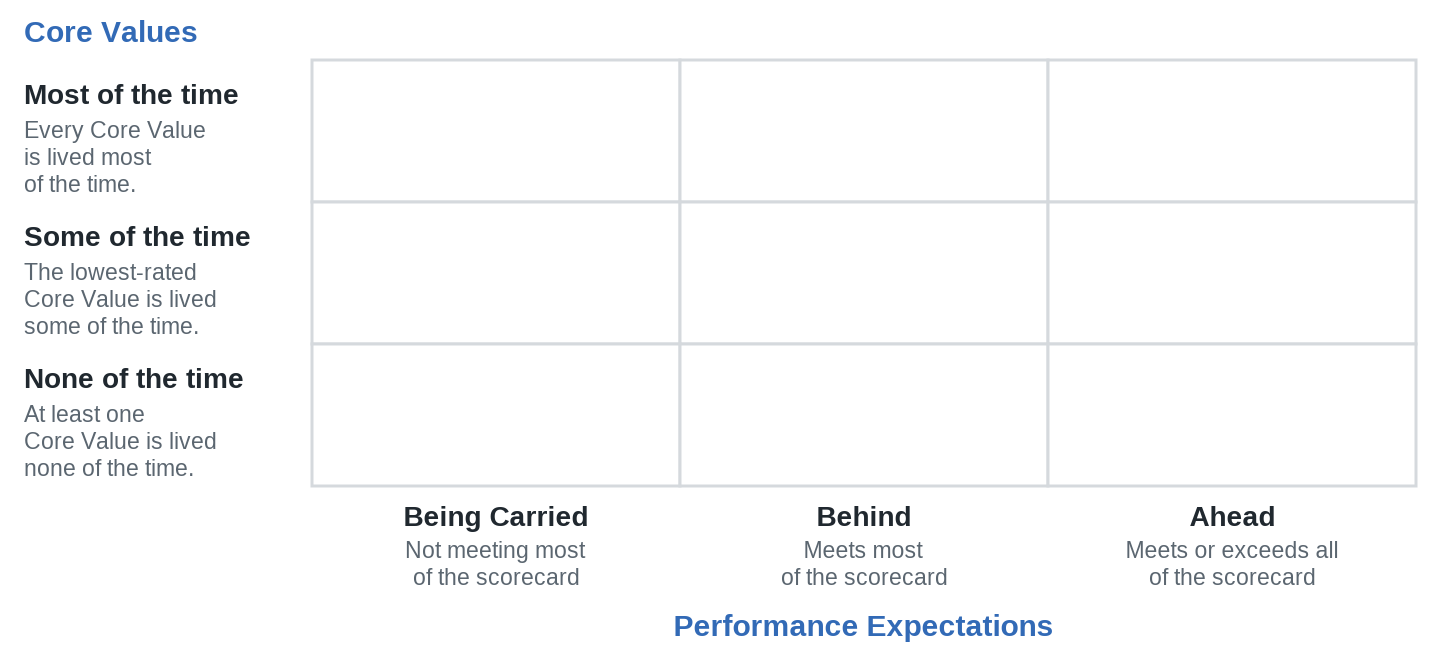
Say which stage you are at. Then use that evidence.
Stage 1
Use what you have observed, the current job description and your judgment.
Stage 2
Use what you have observed, with the scorecard as the guide.
Stage 3
Use the evidence recorded in each person’s scorecard reviews.
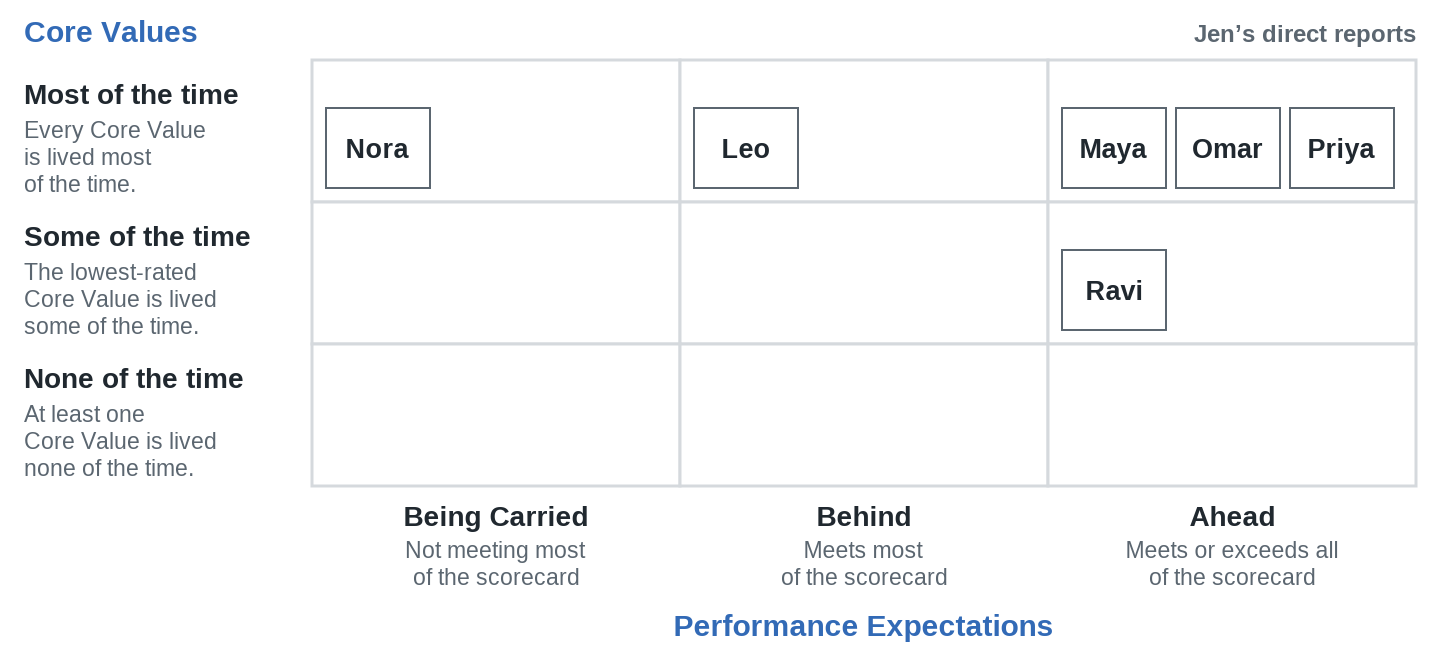
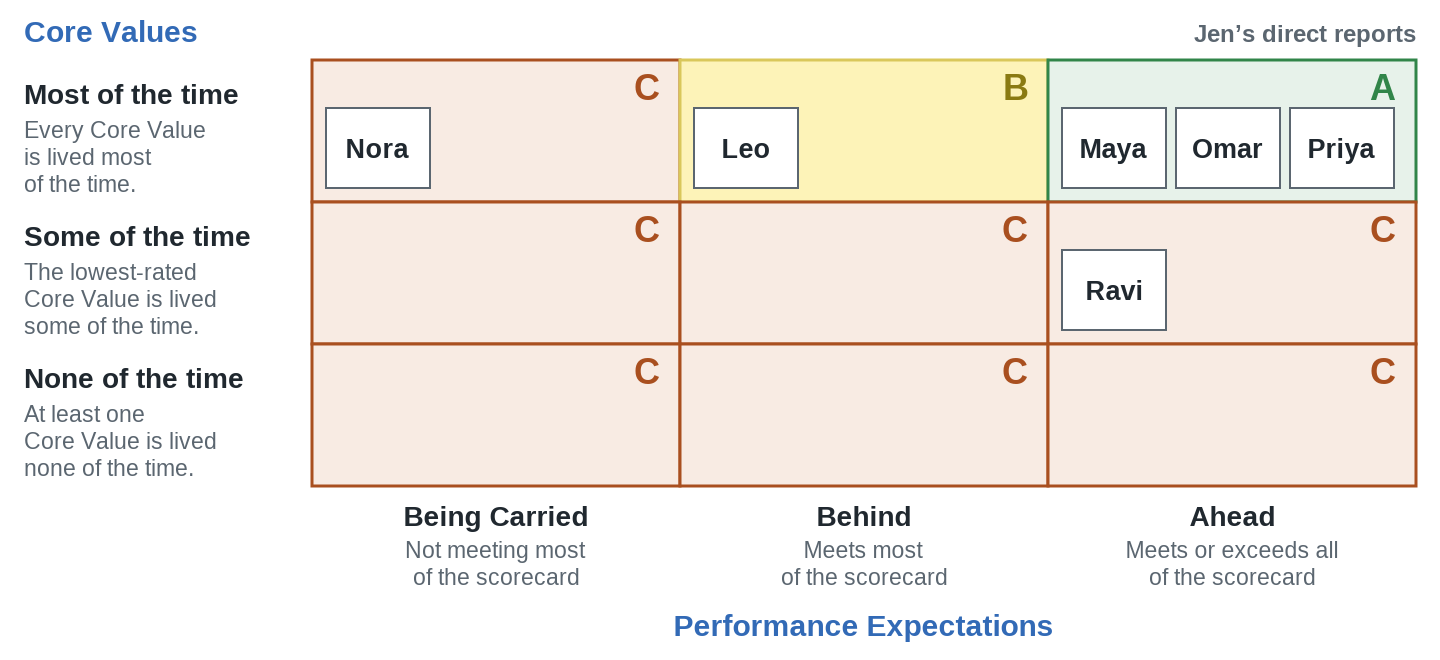
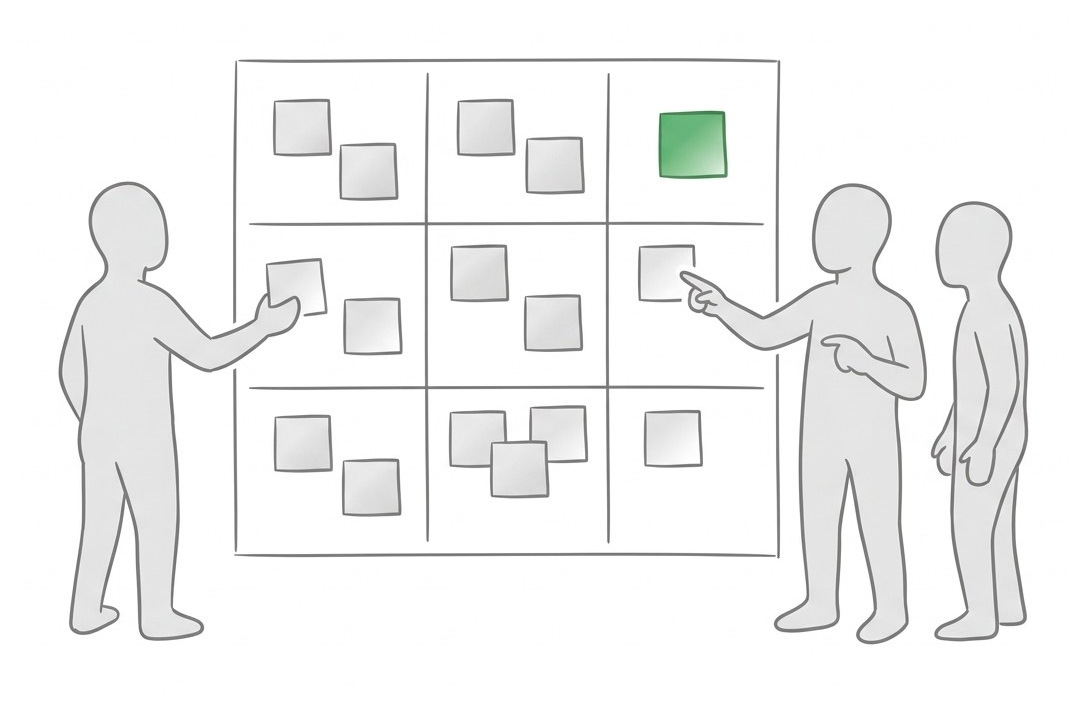
Write each name on a note, in your own color. Place every note on the grid.
Then present your team, one leader at a time.
Peers say whether they see each person the same way.
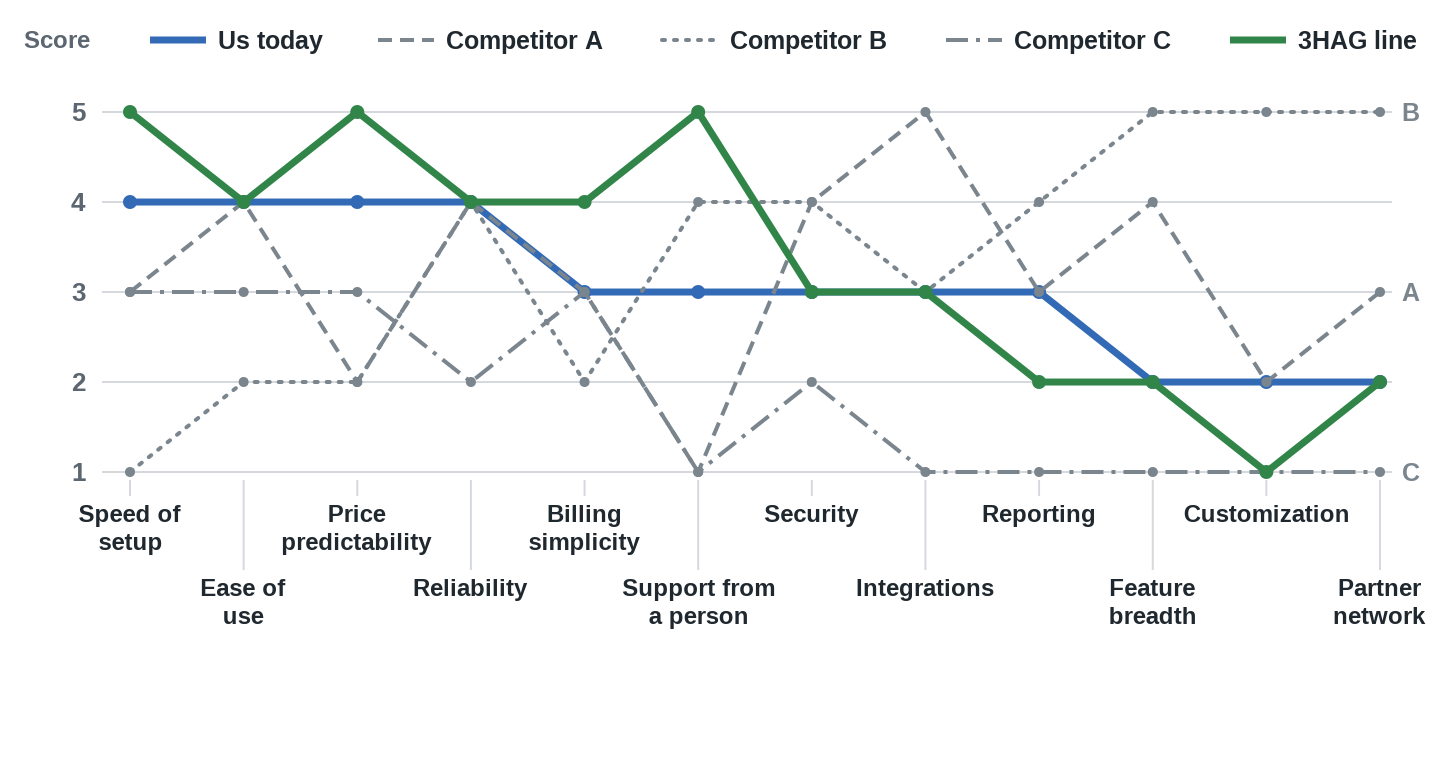
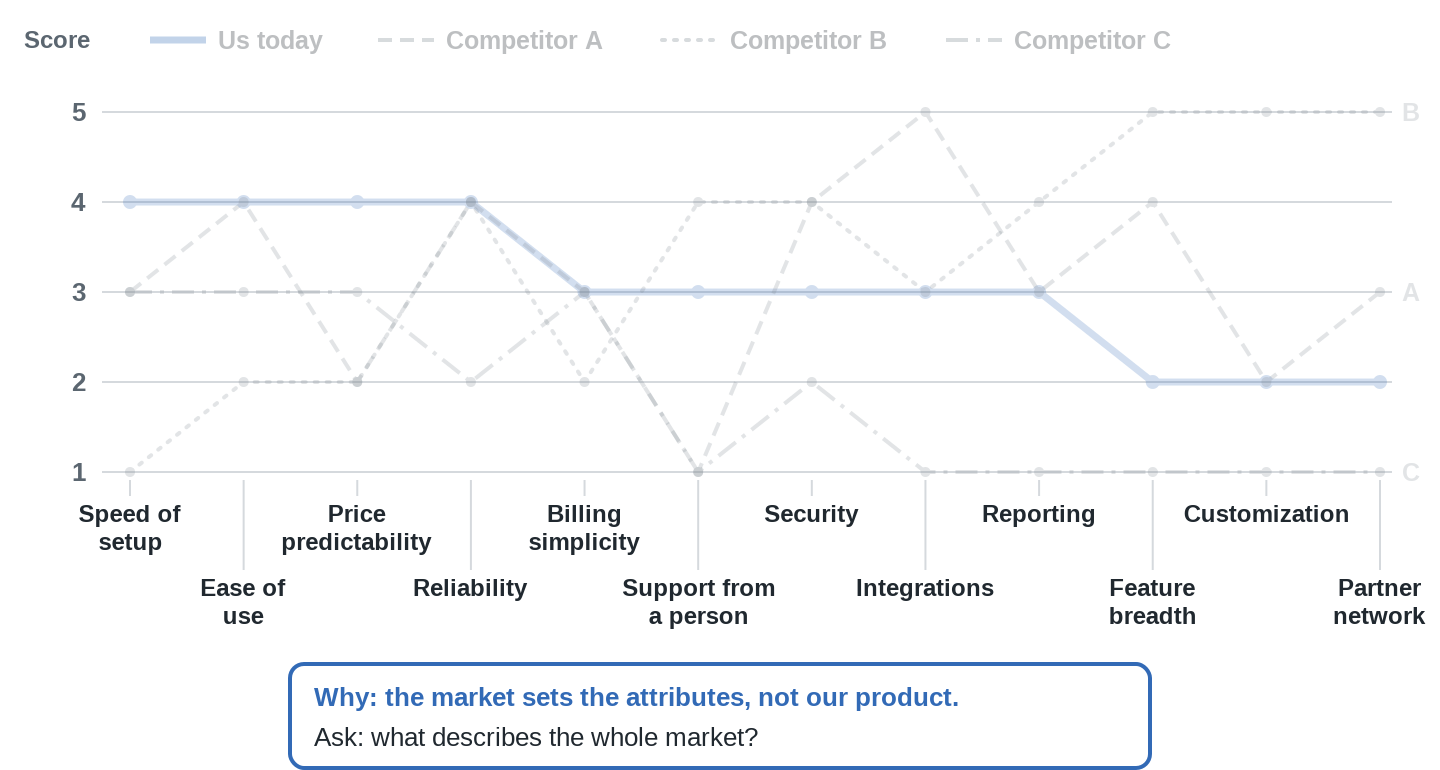
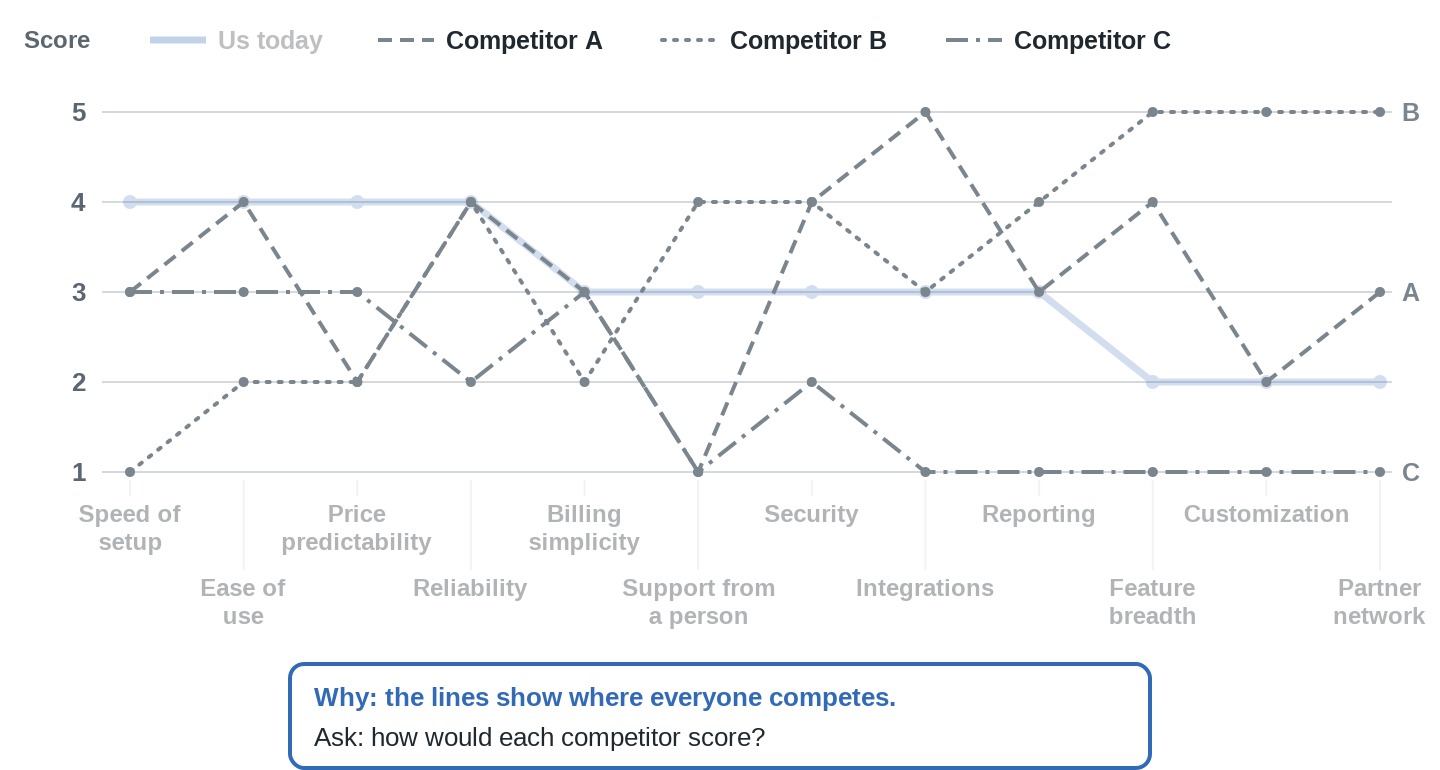
It compares your whole company with your competitors, across your market.
Where does everyone compete on the same thing?
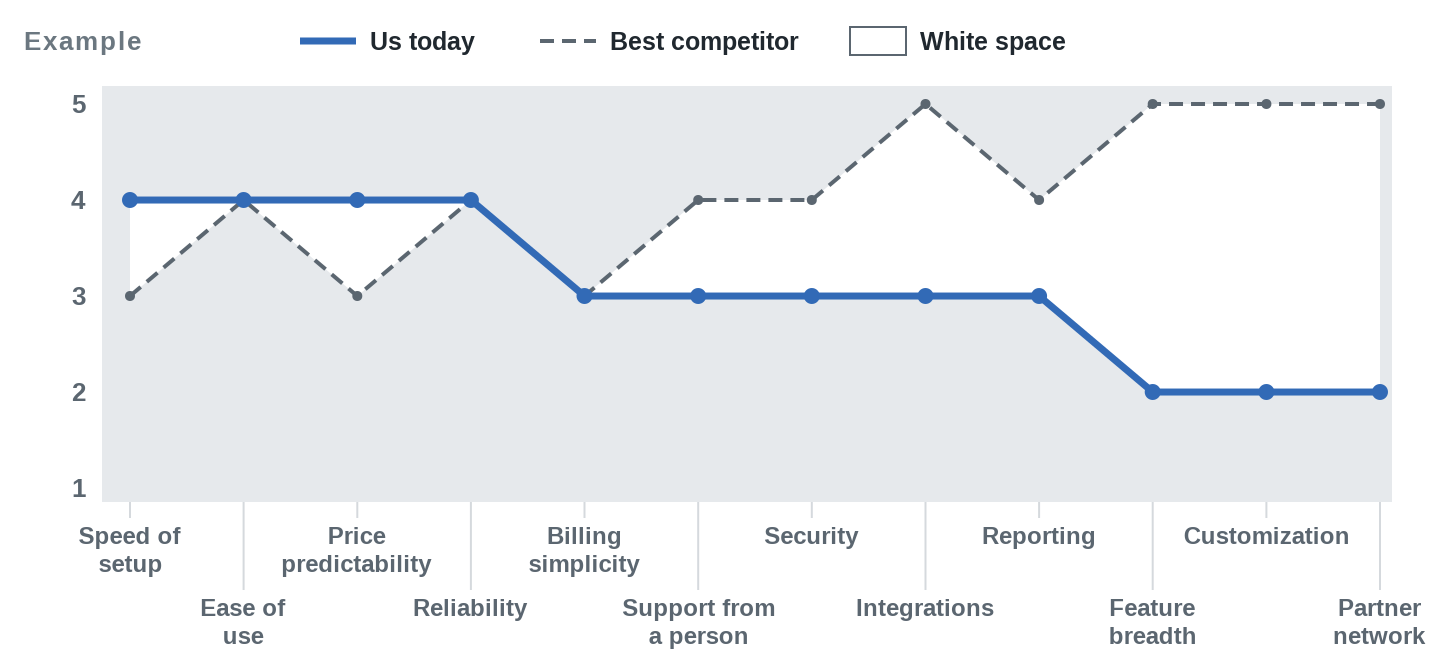
Where is the white space between you and your best competitor?
Where will you be in 3 years?
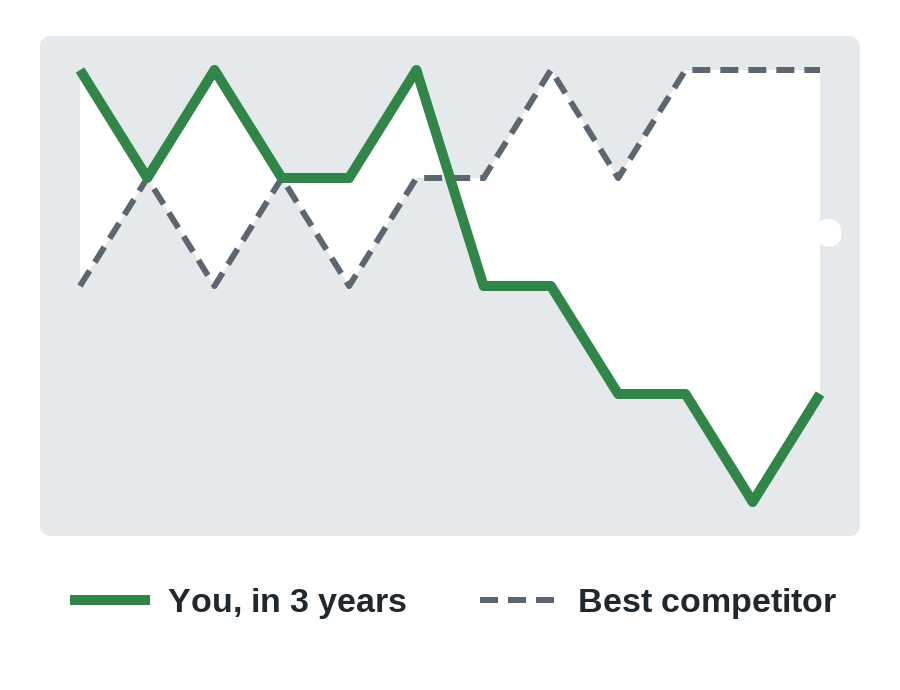
It is where you will be in 3 years. You invest to lead in some places and pay for it by giving up others.
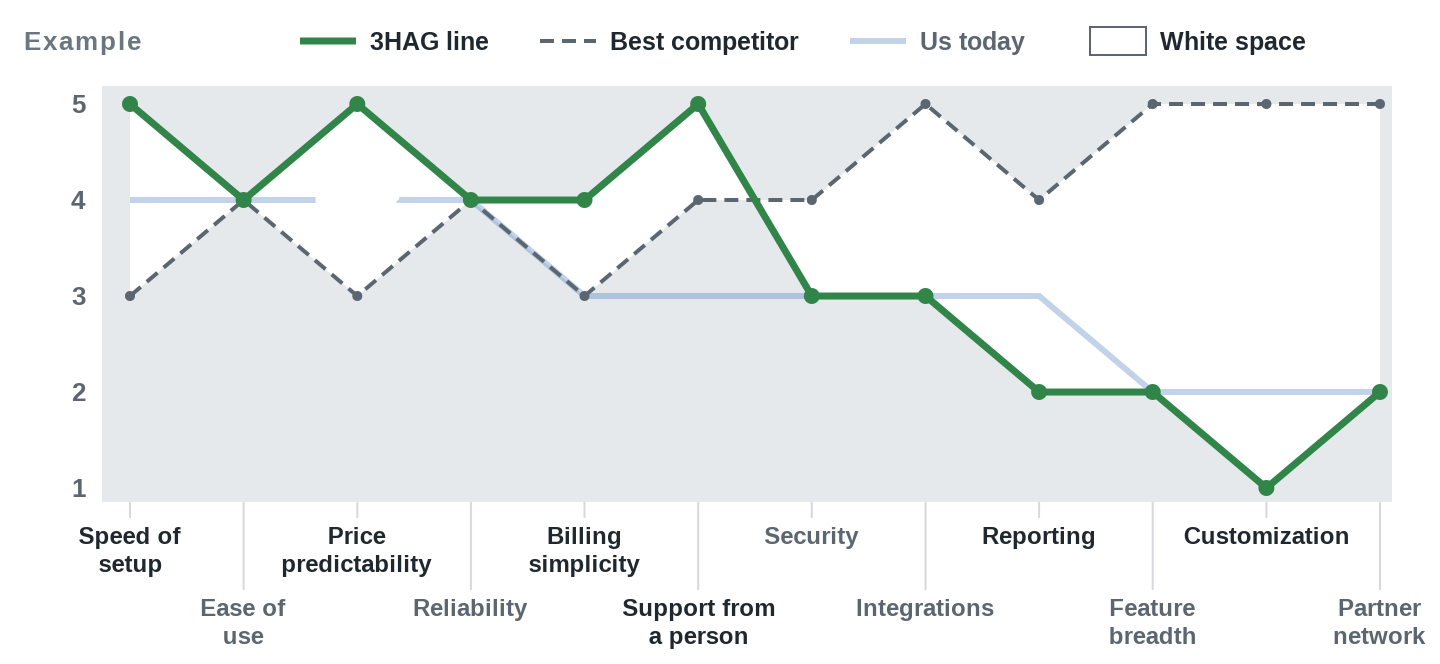
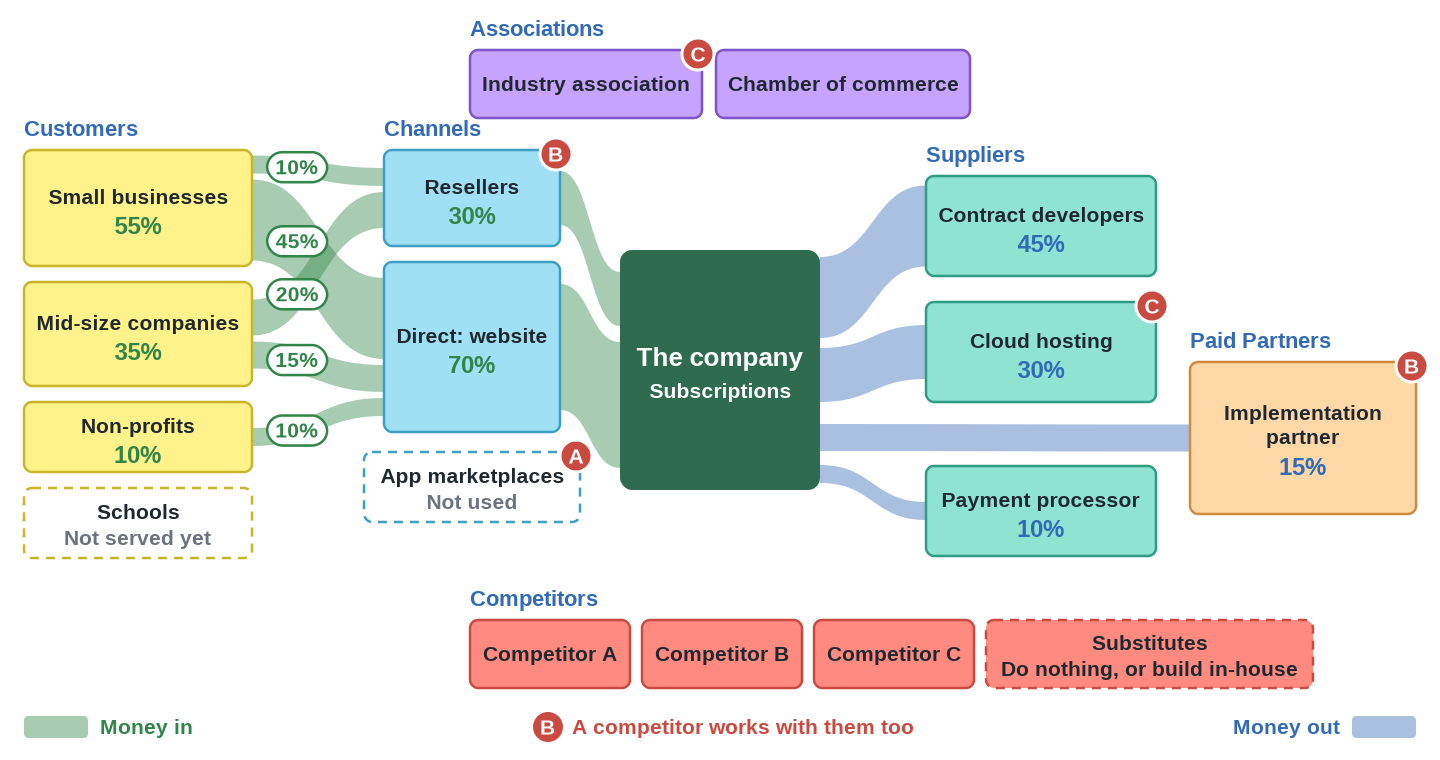
Put your own Market Map on the screen. What changed last quarter?
Start from everyone on your Market Map.
On your own, write 5 to 7 things your market compares companies on.
Share them. Group the ones that mean the same thing, and name each group.
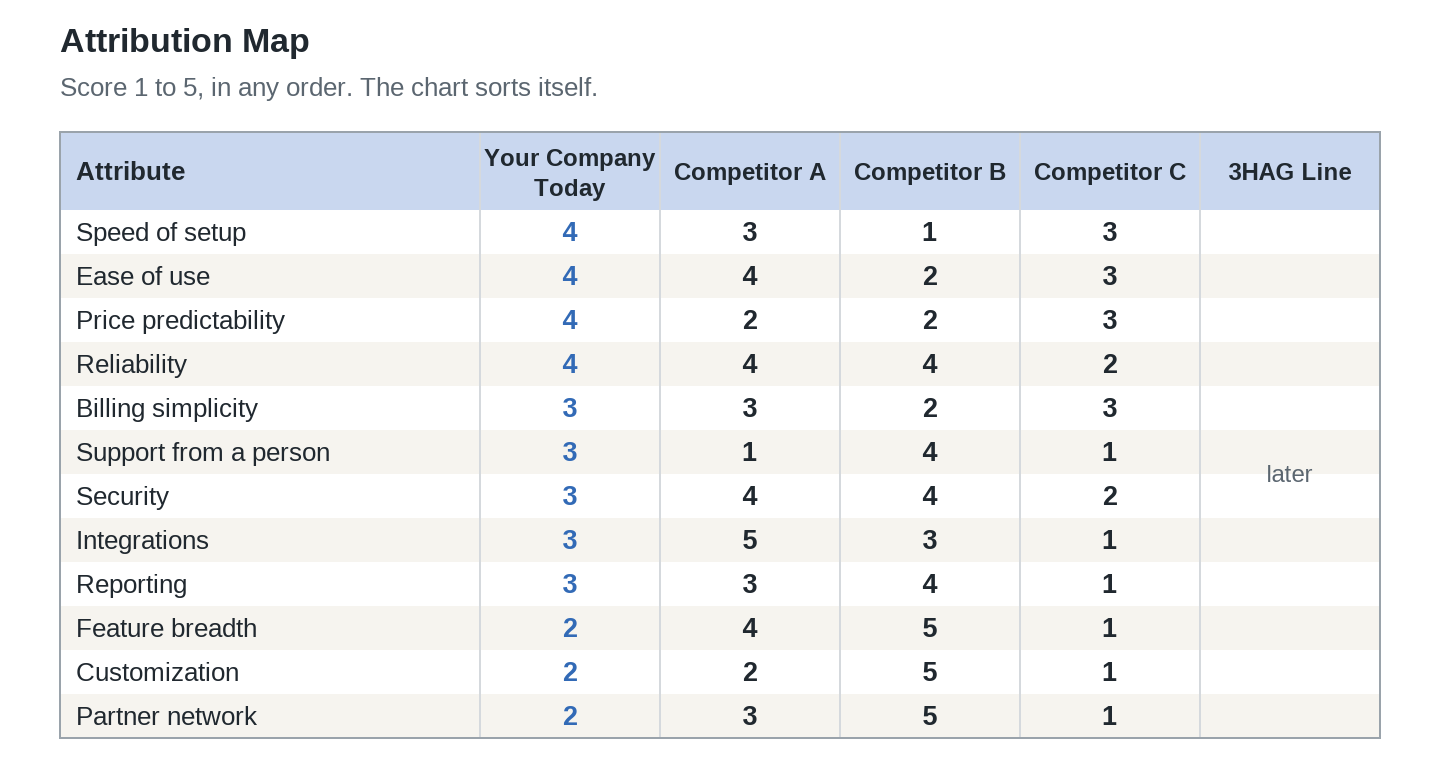
Finish with 12 to 15 attributes as a team.
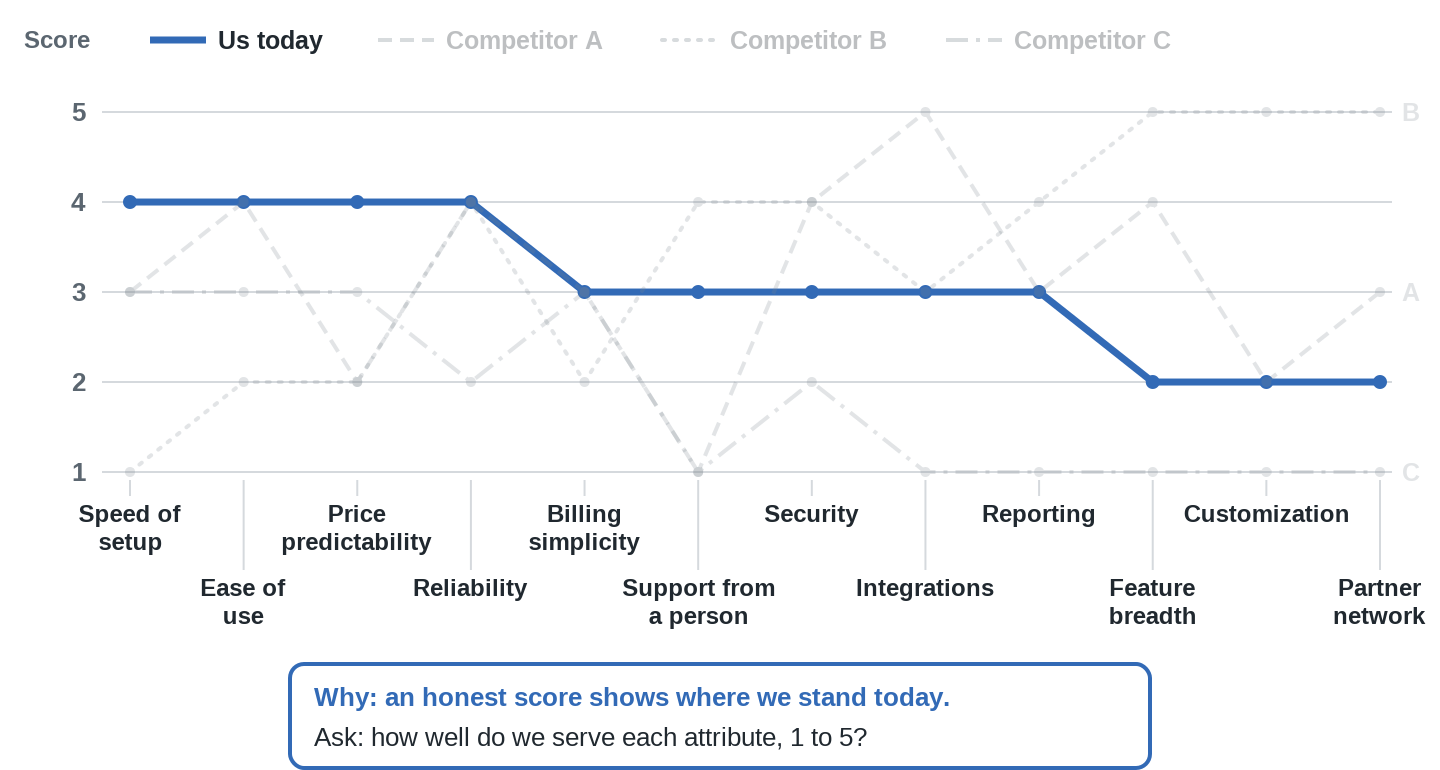
One person copies the Attribution Map sheet and enters your attributes.
Score your company and two or three competitors, 1 to 5.
Everyone scores alone first. The CEO shares last.
Enter the agreed scores. The graph sorts itself.
Then ask: where is the white space?
Put your Core Customer on the screen. Does each patch of white space serve one of their three ranked needs?
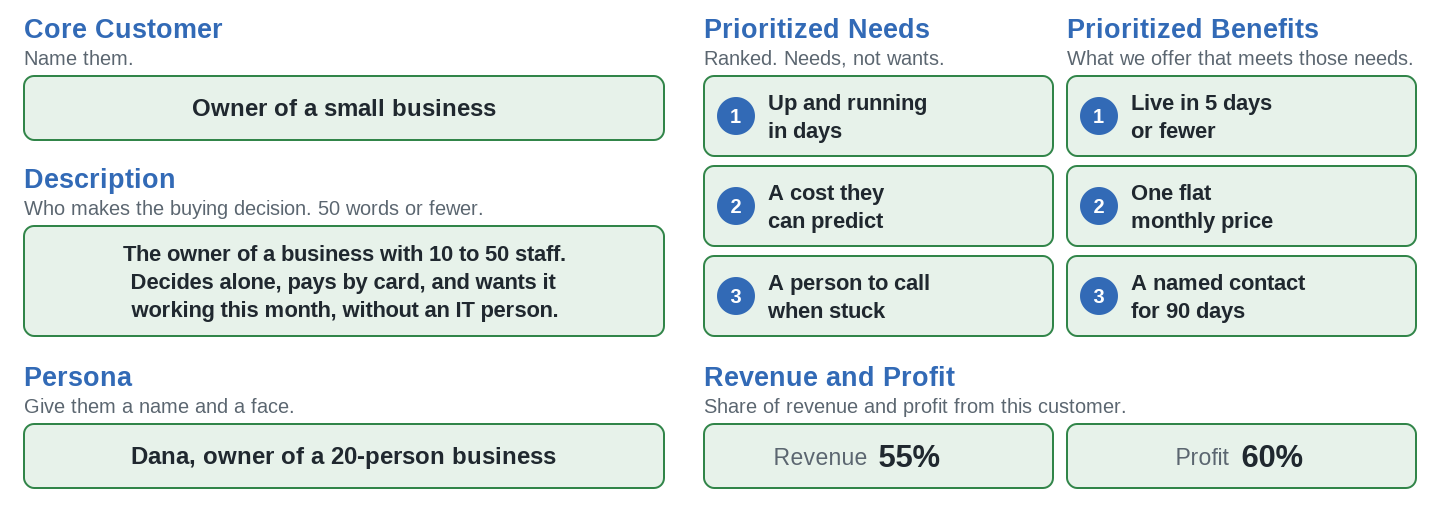
Decide where to invest, what to maintain and what to give up.
Enter a 3HAG score for each attribute.
Ask: what will we be worse at in 3 years?
Look at the finished graph together. Then ask:
What should become a priority this quarter?
What will you stop doing because the 3HAG line drops it?
In Metronome: open One Page Plans. Read your 3HAG aloud. Then test it against your 3HAG line.
Each capability builds an attribute where you will lead.
No capability builds an attribute you chose to let drop.
The statement and the “known for” describe the future company.
The numbers are set, each with an owner, and the widgets support the revenue.
Decide: what in the 3HAG changes?
In Metronome: open Annual Priorities. Read your 1HAG aloud.
Every number and priority has one owner with capacity.
Each priority builds a 3HAG capability or moves a KFFM lever.
No priority invests in an attribute you chose to let drop.
Each measure has a target and an achieved-by date.
The targets keep you on track for the 3HAG.
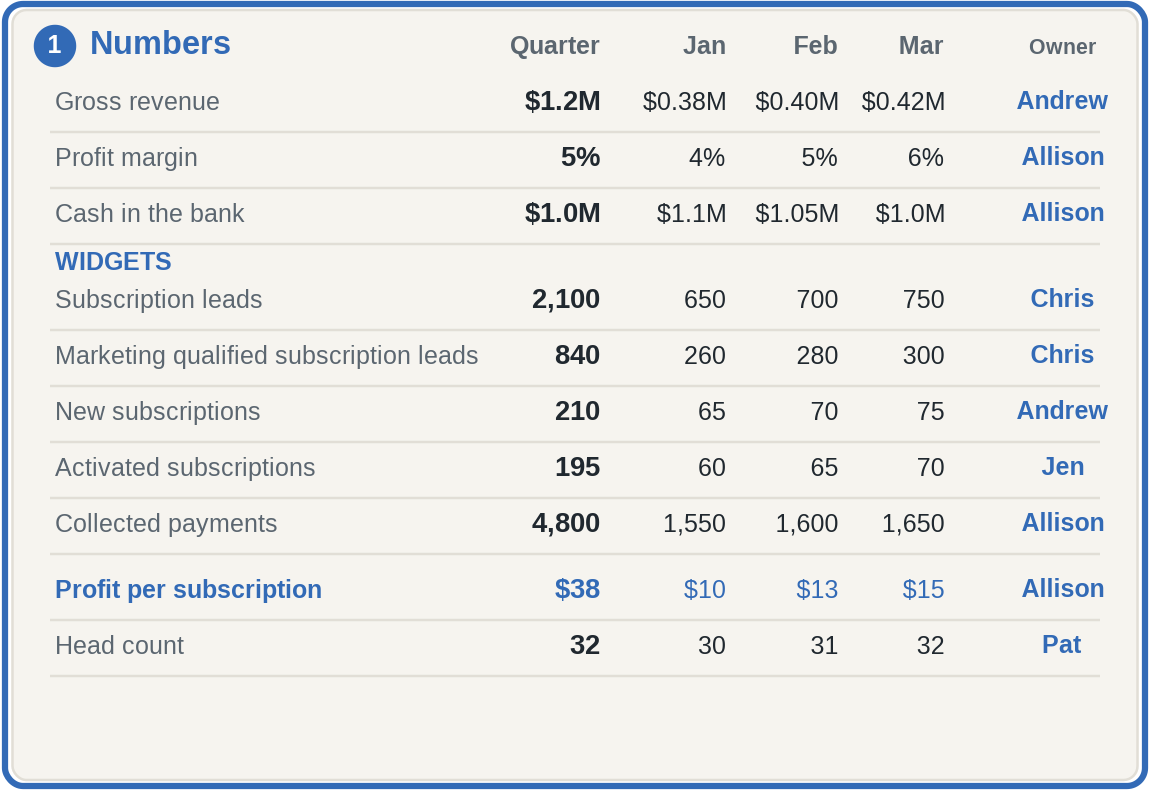
The widgets support the revenue, and head count is set.
Confirm the quarter and its end date.
Gross revenue, margin, ending cash, each widget and head count, month by month.
Name an owner for every number.
No data yet? Set your best estimate, then track it.
Is each target big enough to keep you on track for your 1HAG?
What must you get done now to deliver the 1HAG?
List candidates: last quarter’s open priorities, your 1HAG priorities, the KFFM lever you picked and what the white space changed.
Test each with the six questionssix questionsWhat does it build or move?How much will it move a critical number?How soon will we see it?Who can own it and succeed?What will it cost?What could go wrong?, then rank.
Agree on the owner, done-by date, measure of success and achieved-by date.
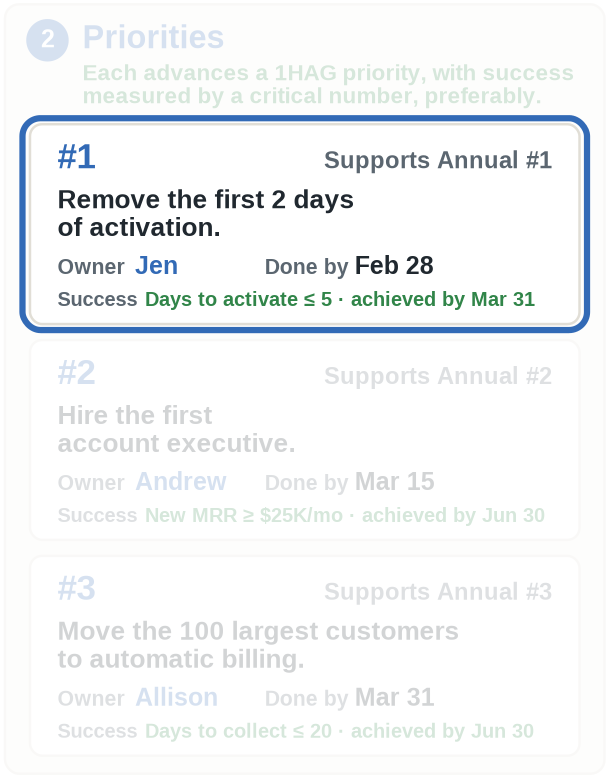
Ideally 3, up to 5 company priorities in total, including #1.
Connect each to a 1HAG priority. Give each an owner, a done-by date, a measure of success and an achieved-by date.
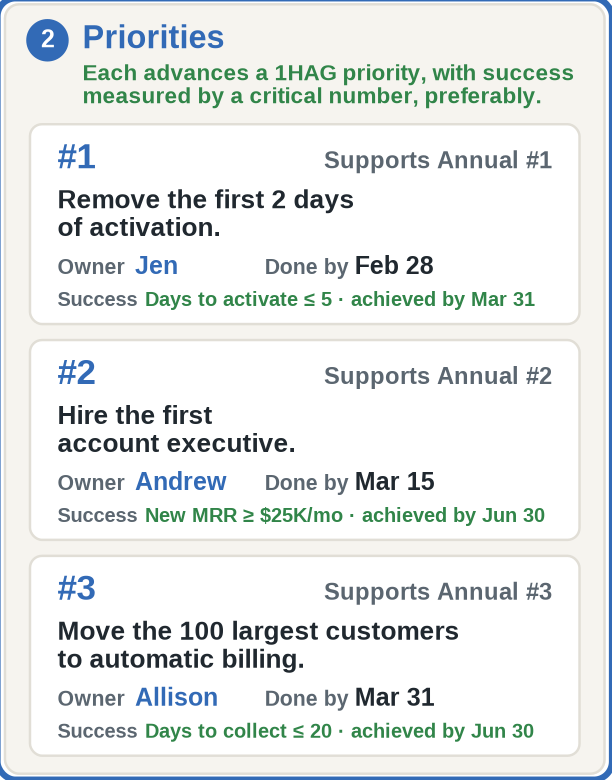
Read your QHAG aloud from the board before you move on.
Every number and priority has one owner with capacity.
Each priority advances a 1HAG priority.
Each priority has a target and an achieved-by date.
Each priority moves its number enough, and soon enough to see.
The targets keep you on track for the 1HAG.
The months add up to the quarter, and head count is set.
The 13 weeks build to the quarter’s widget targets.
Each lane has the same owner as its priority.
Each week’s step moves the priority toward its measure of success.
Work together on the 13-Week Sprint Lanes page of your board.
Forecast each company widget for all 13 weeks.
Give each company priority one lane. It keeps its owner.
Write one step for every active week.
Step back and look at every lane together.
You have the people to do it.
You have the cash to do it.
The 13 weeks build to the quarter. Numbers you count add up. Cash and head count match week 13.
Measure
The one you named on the Team View. One for each function you own.
Commitment
Two delivered beat five started. A company priority you own goes first. Test each with the six questionssix questionsWhat does it build or move?How much will it move a critical number?How soon will we see it?Who can own it and succeed?What will it cost?What could go wrong?.
Development
Add a skill or behavior to develop, beyond the 5 work priorities.
Name company priority #1 and its owner. They go first.
Read your critical number, priorities and professional development.
Peers ask: can you get all that done?

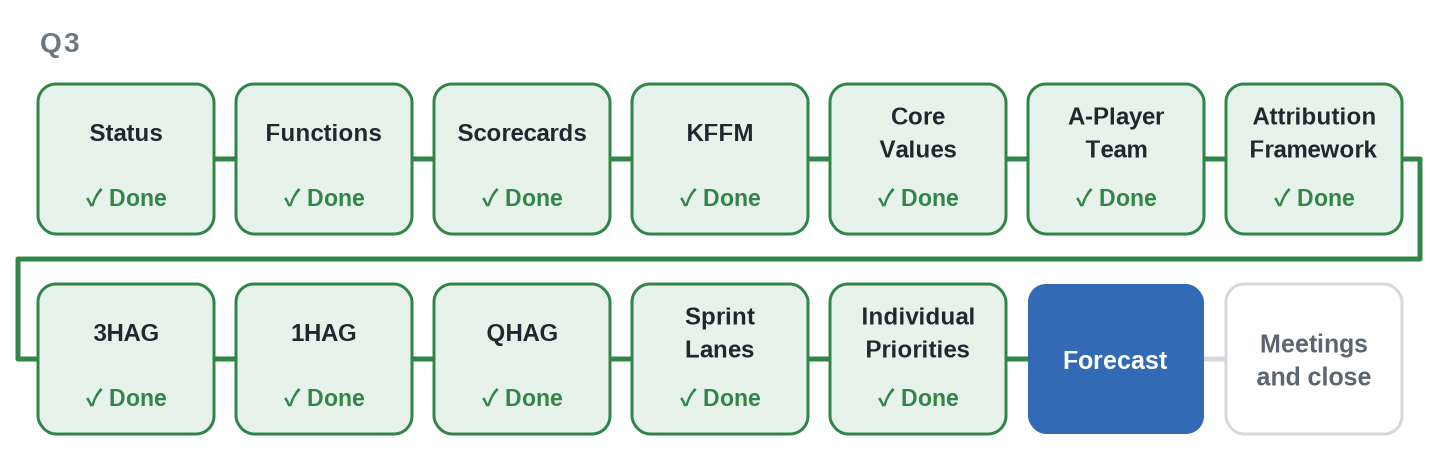
Each individual priority supports a QHAG priority or the owner’s critical number.
The 1HAG and the QHAG each have ideally 3, up to 5 priorities.
Every priority has a done-by date and a measure of success.
Each QHAG priority advances a 1HAG priority.
Finance
Allison builds it and keeps it honest. She answers for cash collected and for how accurate the forecast is.
Each leader
Chris owns the leads, Andrew the closes, Jen the activations. Each checks their number every week.
CEO
Cash is every trade-off between growth and profit. Pat makes those trade-offs, so Pat owns the total.
Use the 12-month template.
Start from the KFFM widgets.
Before the annual, each leader gives Finance their own widget numbers.
Put a name on every line of the profit and loss.
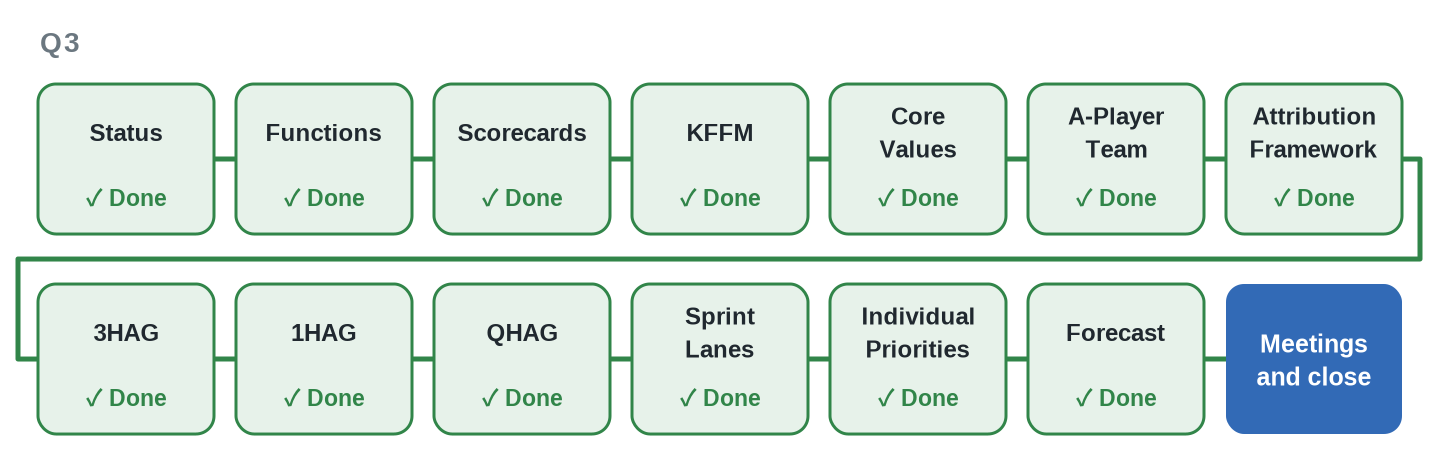
In Metronome: open Meetings. Running? Working? What to change? Rate 0 to 2.
Daily
7 to 10 minutes, every day except the day of the weekly meeting.
Weekly
15 to 30 minutes. Each leader with each direct report, led by the direct report.
Weekly
60 minutes or less. The CEO owns it.
Monthly
30 to 45 minutes. Everyone. The CEO owns it.
New today.
One page, from the CEO to everyone, by Friday noon.
In it: good news, the numbers, priority status and a positive close.
The first one goes this week.
Write them together now. Each leader shares them with their team tomorrow.
Metronome
Your One Page Plan and each leader’s priorities. Add each lane’s steps under its company priority. Start the weekly KFFM review and the CEO’s weekly email.
People
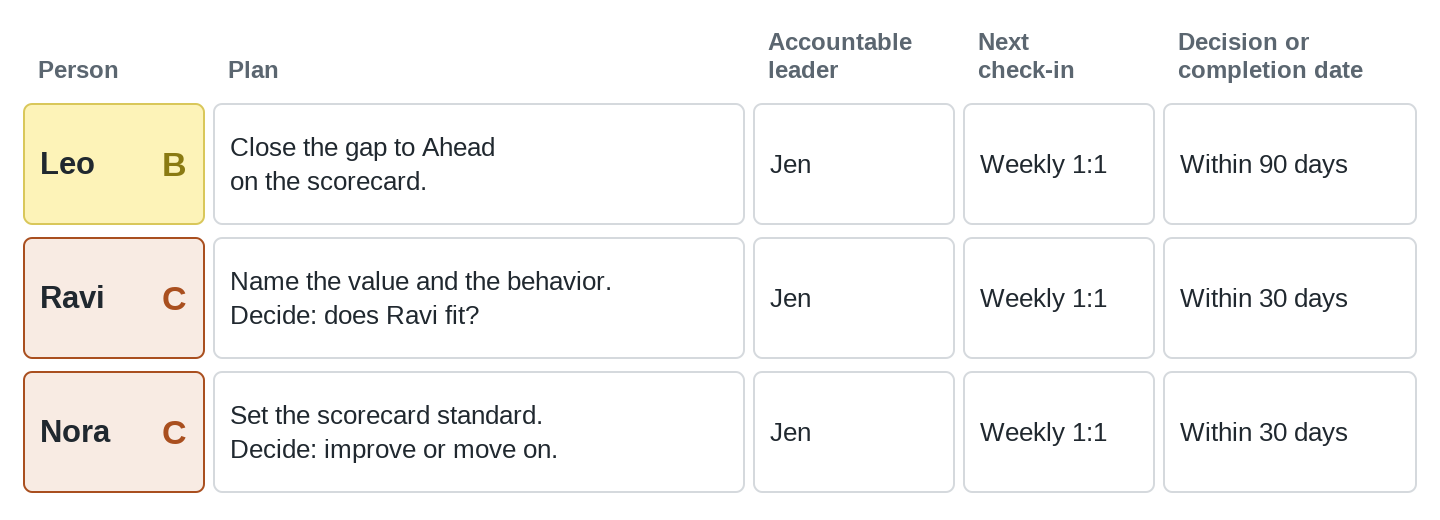
Share the Core Values with the whole company. Write a plan for everyone below A, and act on any C-Player. Complete annual reviews on the function scorecards.
Strategy and cash
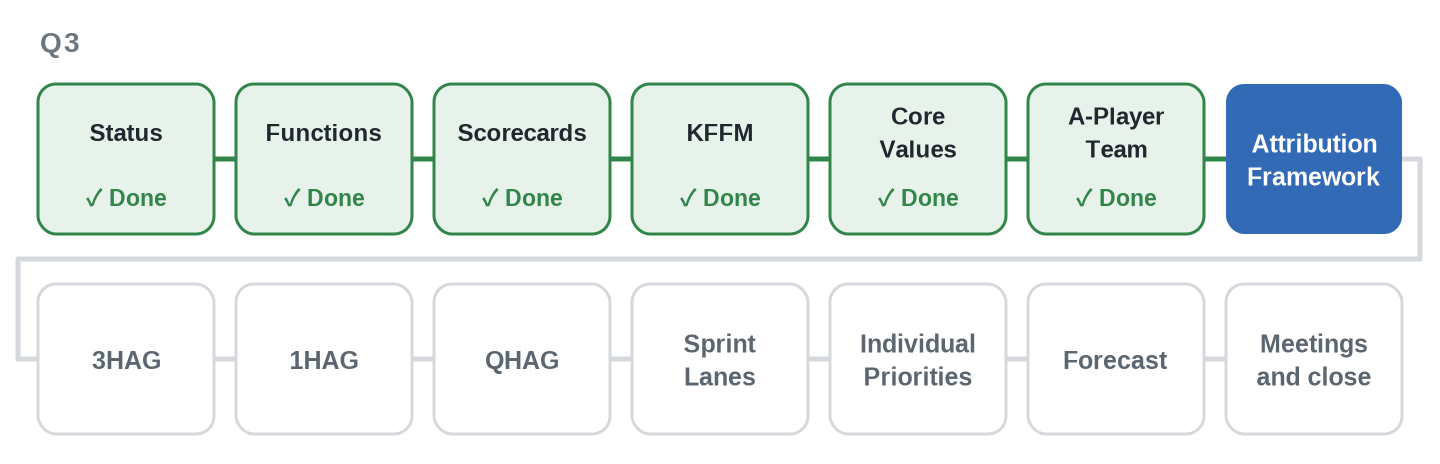
War Room: update the Market Map and Core Customer, add the Attribution Framework. Finance builds the 12-month forecast.
Before next session
Read Beyond Entrepreneurship 2.0. Take the Five Dysfunctions team assessment. Complete the checklist and prep surveys.
For each answer: met, partly met or still open?
One phrase. 5 words or fewer.

Scan the code to open the full deck on your phone.